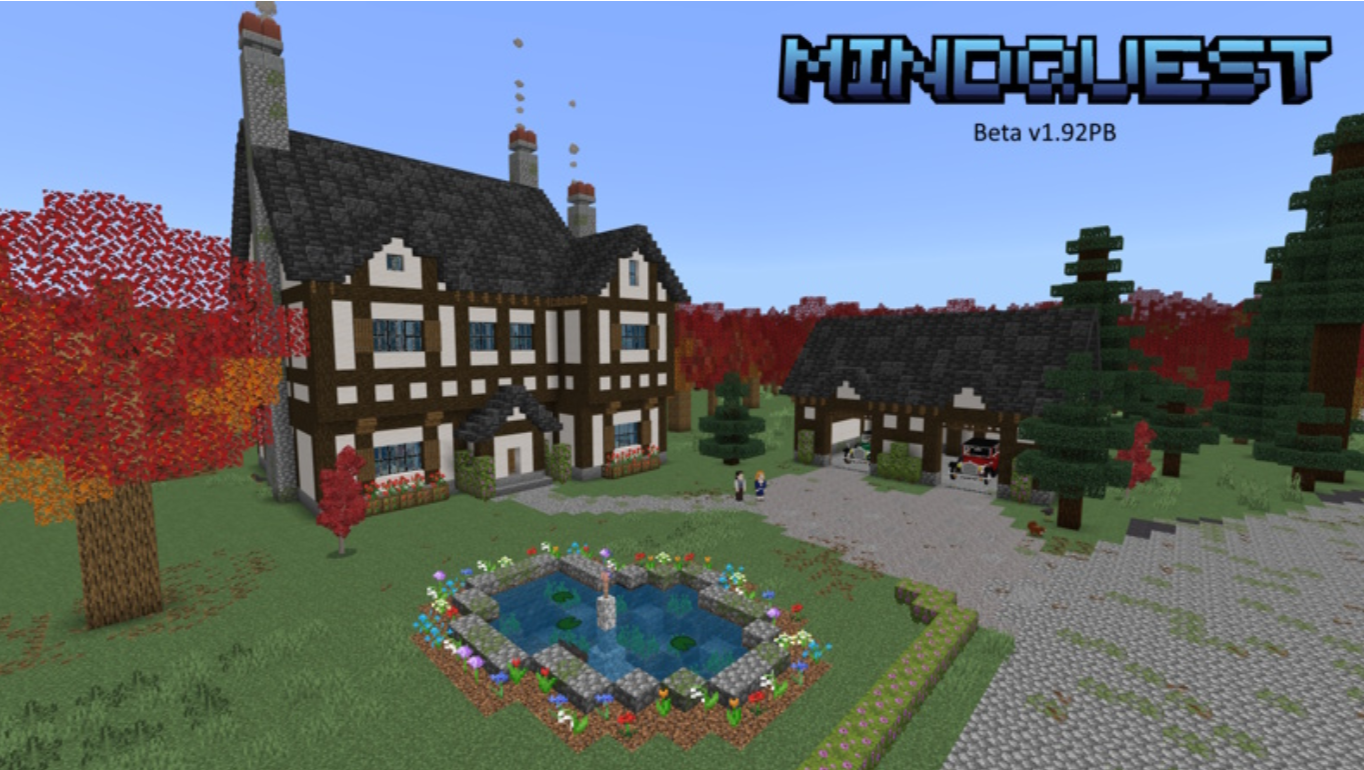
MindQuest was created to solve a problem came up against when we wanted to measure children’s wellbeing levels and the impact of our Minecraft Education programmes for neurodivergent young people, over the course of a six month project.
We needed to use the Stirling Children’s Wellbeing Scale to measure changes in young people’s wellbeing over the course of the programme.
The young people we work with are neurodivergent. Some have ADHD and Autism. Some have demand avoidant profiles. Others have experienced anxiety or trauma around school, assessments or being asked to complete forms. Asking them to stop what they were excited to do, sit down and complete a questionnaire before they could play Minecraft was not something we wanted to do.
We knew it would create barriers before the first session had even started. It was a 16 question questionnaire. We would have created tension, demands, anxiety, and stress with this task.
So we decided to put this questionnaire actually in a world in Minecraft Education. Where the young people played as normal and an NPC asked the questions. And their responses were transmitted securely and anonymously to our server as a CSV file.
We designed an impact measurement tool in using Minecraft Education and built a rough prototype on a locally hosted server to collect the response data. We wanted to see whether young people would engage with a wellbeing questionnaire if it was presented in a familiar, low stress, accessible environment.
They did!
Young people completed the survey naturally as part of the experience. There was less resistance, less anxiety and far more engagement. They told us it didn’t feel like a questionnaire, it was just playing in Minecraft.
Schools, youth organisations, charities, alternative provision providers, researchers, community spaces, and health services all need to collect data. They all need evidence of impact. Yet many are trying to gather that information using methods that unintentionally create barriers for the very children and young people they want to hear from.
That’s where MindQuest can help.
It isn’t about replacing professional judgement or turning surveys into games.
It’s about giving young people a more accessible way to share how they’re feeling.
How MindQuest works
MindQuest currently includes six themed Minecraft worlds.
Each world has its own look and feel, but they all follow the same design principles. They are calm, sensory aware, low demand, non-competitive and designed to help young people feel comfortable.
Every world contains:
- Two Welcome NPCs (Non-Player Characters), which explain how the world works and offer something, eg food to the player.
- One Survey NPC, located close to the world spawn point, but a short distance to immediately draw them in, and create engagement by exploring.
Players interact with NPCs by right clicking on them.
When a player first joins the world, they are placed into Adventure Mode. This allows them to explore and interact with NPCs, but prevents them from breaking or placing blocks.
Once they have completed the questionnaire, they are automatically switched into Creative Mode, where they are free to build, create and continue exploring the world, which creates a desire to complete the survey rather than a demand.
Why is it designed this way?
Every design decision has a purpose.
We created six different themed worlds because choice matters. Giving players the opportunity to choose where they begin helps create a sense of ownership and can reduce resistance, particularly for young people with demand avoidant profiles.
The worlds are intentionally calm. There are no objectives, mini games or exciting activities competing for attention before the survey has been completed. We wanted to remove distractions without making the experience feel restrictive.
Creative Mode only becomes available after the questionnaire has been completed. It’s a way of encouraging players to complete the survey before becoming absorbed in building, exploring or creating.
The environments are designed to feel peaceful and predictable. Familiar Minecraft mechanics, gentle scenery and low sensory demand help create a space where young people can slow down, regulate and focus on answering the questions.
Most importantly, MindQuest meets young people where they already are.
For many children, Minecraft is somewhere they feel confident. They know how to move around, interact with the world and express themselves. By bringing the questionnaire into that environment, we remove one more barrier to participation.
We believe that when young people feel comfortable and safe, they give more honest answers.
That leads to better conversations, better understanding and better data.
MindQuest isn’t about making questionnaires more entertaining.
It’s about making them more accessible.
Not everyone will want to use our MindQuest world. So you can use this impact measurement tool in your own Minecraft Education worlds. Accessible, engaging, and unique.
When we remove barriers to engagement and participation, we don’t just improve response rates, what is most important is we get to hear from young people whose voices are often missed.
MindQuest World Builder: Dan Noble, Outside the Blocks
MindQuest Developer: Raine Aster, ASP.NET Core full-stack web development
MindQuest Founder: Rachel Conlisk, Creative Active Lives CIC, MineMania & DigiTribe.